
The Xbox Interview: J Allard
We sit down for an extensive interview with Microsoft's Chief Xbox Officer. Agenda: Xbox Live, hackers, Halo 2, Rare, a twenty year Xbox business plan, and Media... to go.
Before the Xbox first launched in 2001, a lot of analysts looked towards the Xbox executive team to try and picture whether or not the machine would be a success. Now that the machine is clearly here to stay, it would be foolish to say that the team's goals are any easier. Xbox chief at Microsoft, J Allard, is only too aware of that.
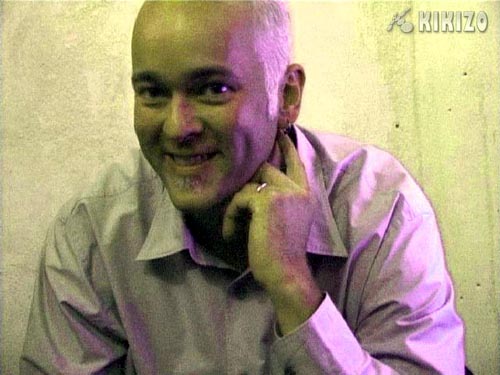 J Allard: "Xbox is a twenty year business".
We sat down with J for an extensive interview about Xbox Live, the Rare acquisition, and what the future might hold in store if Microsoft has its way.

Kikizo: So J, are you tired?
J Allard: A little bit... Peter Molyneux always tires me out. He didn't get up for our run this morning, we were out till about four last night, and then we were supposed to be in the lobby at 8.29 but he didn't show.
Kikizo: It was quite interesting what you were saying earlier about the whole 'cheating' business online with Xbox LIVE. How are you going to deal with consistent online cheaters specifically?
|
"You can't change your Gamer Tag. It's permanent, like a tattoo. If you act like a jerk, there's no escape." |
You know, by having a centralised service and Gamer Tags, we can do things like monitor how many dropped sessions you've had, and we can publish that if we choose to - like an eBay rating. We can show how many people have said positive and negative things about you. There are all sorts of different techniques that people are experimenting with in the online services... but in the beginning I think we'll just leave it down to self-policing and see how it goes, then we have the freedom to implement a lot of different things.
Kikizo: What is the procedure for registering a Gamer Tag?
J Allard: When you go into a store and but the Xbox LIVE kit, it contains a subscription code. So you fire up your Xbox, you put the disc in, and it basically updates your dashboard to have online capabilities. You go Live, and there are four screens that you step through. One of them is 'what's your Gamer Tag'. When you choose it, first of there's any foul language in your Tag, we'll say you can't use it. If you pick one that somebody else already has, we do the recommendation thing. It's all real-time and it takes about five minutes to do it.
Kikizo: How often can you change it?
|
"Nobody's out trying to hack a GameCube." |
Kikizo: Isn't it going to be a problem that if everyone has unique names, you'll run out of names and there will be too many numbers in all the names?
J Allard: We've thought a little bit about that. It can be a problem and we have a couple of ways at looking how we can scale that when we need to. Certainly the first 10,000 BETA users have been fine. But the interesting thing was the number of unique names that have numbers in them, despite the fact that their name without the number didn't exist. So lots of people have their Hotmail address with a number in it and want their Gamer Tag to be the same. They just think of themselves as Joey33! So there are guys out there who want to use numbers in their name even though they don't need to, because that's part of their vocabulary now!
It's fascinating, the system is not built on text, I mean we have a very large unique number which is your Gamer Tag, there is a text component to it which what you think of as your Gamer Tag, but then there are a couple of different ways we can expand that. [smiles].
Kikizo: So, if somebody's friend asks them what makes Xbox LIVE better than PS2's online offering, what do you say to them?
J Allard: One obvious difference is voice - having your voice in every single game. What we wanted to do is create a simple and consistent approach towards online gaming, with conventions. You know what a Gamer Tag is. They exist in all games. You know who your friends are, they exist in all games from all publishers. You can count on voice - once you've made your purchase with the communicator, it works, everywhere, as expected. So we've we've tried to create some conventions to make it very friendly, but also taken all the work out for developers. By taking the work out for developers, and making it very easy, we'll have a broader library of games than on systems that don't have that service.
Kikizo: Given the feelings of some parts of the gaming community towards Microsoft as the geek brand, isn't it going to be a huge target for hackers?
|
"We want the Xbox Live community to self-police itself first." |
You know we have military-grade security in our data centres. [Looks around to see make sure we're all believing him]. I mean, we have safes, you know - we have my key, your key, three, two, one, turn... we have armed guards. This is serious stuff, because we're talking about people's reputations here. And forget your hi-score, what's more important than your reputation? We have to protect the privacy and the experience of the gamers, and we have to be vigilant about that. It means a lot of technology because we know we're a big target. People will try to take down the service and cheat, and that really can spoil it for others. But we have measures against it - that's just the nature of the Internet in general.
Kikizo: What are the legal implications and privacy issues with you knowing so much about all the users?
J Allard: There are tons of legal implications. We have a team dedicated to these policies. It's one of the major challenges, especially in rolling out the service globally. There is so much variation, different local laws and policies in different countries, and online laws evolve so rapidly. So it's very hard to do that. But the default choice when you sign up is to opt-out of marketing offers, and your existence online is viewed anonymously by our datacenters. But by going online, you do share your privacy with other gamers.
Kikizo: What are you going to do if people just flame each other all the time for no good reason?
J Allard: Well let 'em! If that happens, you're gonna say, "I'm not gonna play with that guy any more!" We don't have that system in place; we want the community to self-police itself first. We think there's enough control in the gamers' hands. We'll take a wait-and-see approach. The interesting thing is that voice has really changed the dynamics of online gaming. People are much more polite. Take two strangers on the street. How often do you see two strangers being incredibly rude to each other and using foul language? Not very often. On the phone? Not very often. But on the Internet? A lot. But one step of the anonymity gets remove when you start talking with your voice - it's much more intimate. And you can't change your name to escape the fact that you were rude to someone. It should make for a more polite place.
|
"We originally called it 'Xbox World'. But we chose not to use that as the official name." |
Kikizo: What are going to be the big online sellers with Xbox Live?
J Allard: Unreal Championship is going to be huge. It was a phenomenal success on the PC, so take the success of Halo on Xbox, and combine those two things... Xbox gamers want first person shooters, they want to go live... and Unreal's PC heritage thrown in could be a very, very potent combination. We've also been very surprised at the popularity of Moto GP. We've had it up and running for a while now with the guys at THQ and Climax. And the cool thing about this... I think I can ay this... if you already bought Moto GP for Xbox, and then you buy the Communicator kit afterwards and install it, it unlocks all of Moto GP. So they've really got that right and I think it'll be big too.




 Satoru Iwata Video Interview - the late Nintendo president spoke with Kikizo in 2004 as 'Nintendo Revolution' loomed.
 Kaz Hirai Video Interview - the first of Kikizo's interviews with the man who went on to become global head of Sony.
 Ed Fries Video Interview - one of Xbox's founders discusses an epic journey from Excel to Xbox.
 Yu Suzuki, the Kikizo Interview - we spend time with one of gaming's most revered creators.
 Tetris - The Making of an Icon: Alexey Pajitnov and Henk Rogers reveal the fascinating story behind Tetris
 Rare founders, Chris and Tim Stamper - their only interview? Genuinely 'rare' sit down with founders of the legendary studio.
 The History of First-Person Shooters - a retrospective, from Maze War to Modern Warfare